Full name: The Linda G. and Donald N. Zillman Art Museum– University of Maine
Location: 40 Harlow Street, Bangor, ME 04401
Website: https://zam.umaine.edu/
The Zillman Art Museum describes itself as, “Maine’s Modern and Contemporary Art Museum”. I will admit the term “contemporary art” made me a little wary before my first visit. While it technically refers to any artwork created since the 1970’s, for many people, myself included, it conjures up images of conceptual art, minimalism, pop art, and performance art, just to name a few.
While I can appreciate different art movements on an analytical level and acknowledge where they fit in within the evolution of art history, the truth is they don’t thrill me. The art I enjoy is made by artists adept and sensitive enough to inject life, emotion and narrative into people and places. I can intellectually appreciate a Rothko, but if you want to move me, give me any Wyeth any day.
First Visit, 2025
I’m happy to report that when we stepped of out the cold air into the Zillman for the first time in winter of 2025 all my worries about their tagline melted away in the warm embrace of exceptional figurative art.
The museum has two floors they configure into 5-to-7 galleries which rotate exhibits every 3 or 4 months. The shows are a combination of visiting artists, retrospectives, and different thematic curations pulled from their vast permanent collection of over 6000 pieces which focuses on art since 1945.
On that day there were five exhibitions on display:
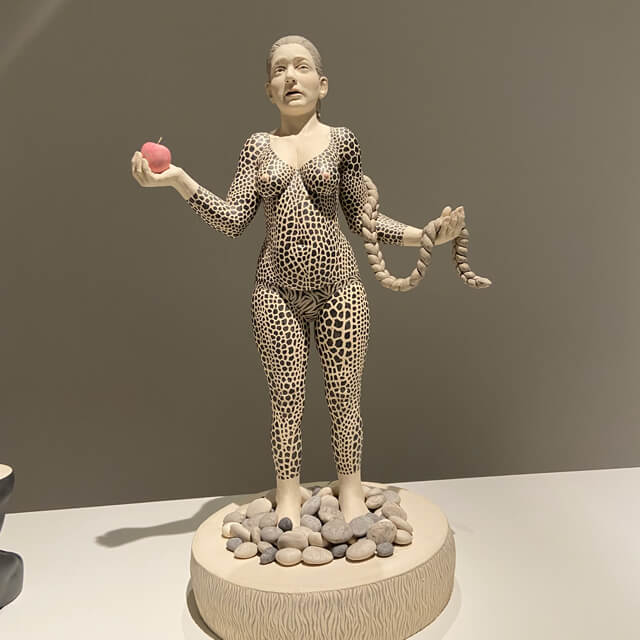
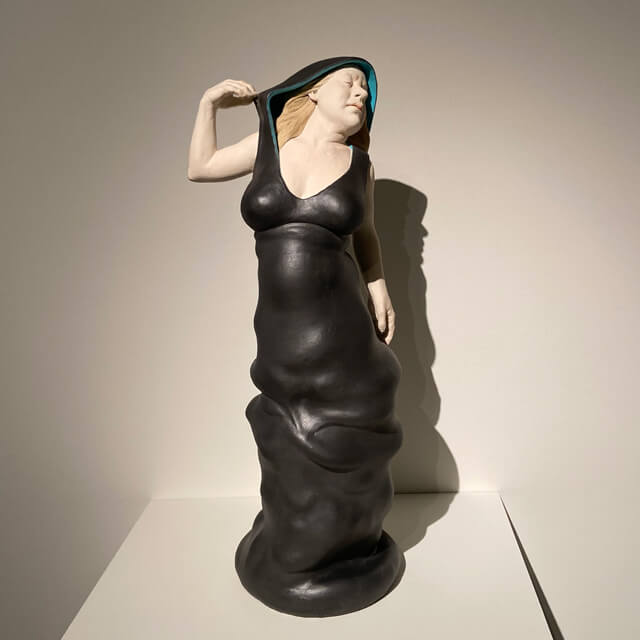
Fly Away Home featured figures and heads by cearamic artist, Claudia Olds Goldie. Her technique of using paint and graphite on stoneware added a touch of surrealism to her depictions of determined looking women in poses reminiscent of Greek goddesses. Their faces felt like they had stories to tell and were captured in the exact moment before they were about to speak to us. Every figure looked like it was on the cusp of sharing its profound wisdom with us.

Click Images to Enlarge
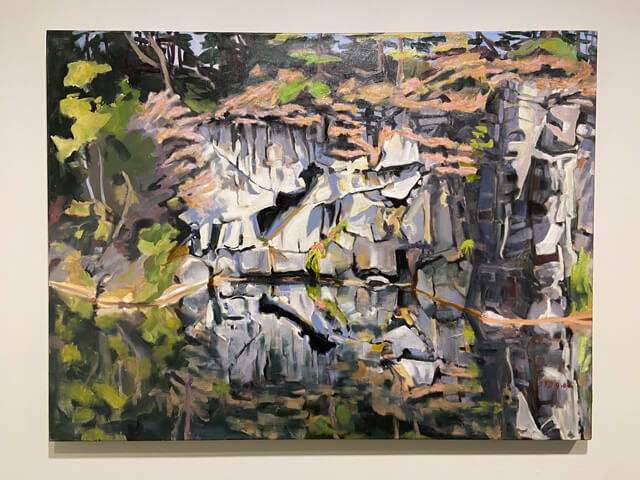
Moments in Place featured wildly expressive landscapes by painter Joellyn Duesberry (1944-2016). Her loose style bordered on the abstract. While I don’t nesecarily like abstract art when there are no figurative elements to extract from it (whether intented by the artist or not) I do enjoy nearly-abstract expressionism. I enjoy looking carefully at an expressive painting to try and find the subject within. Her piece, Birch Tree and Causeway at Pretty Marsh, Mt. Desert, Maine (1989) was that kind of painting for me.
Despite his use of vibrant colors and paper cutouts, Sculpted Dreamscape by YoAhn Han gave me a similar experience to Duesberry’s work. His floral and humanoid shapes get lost in seas of undulating colors and textures. The application of watercolor, ink, paper, flashe, and other media made me feel like I was trying to pick the figurative elements out of a furtive dream.
Even with their root in figurative elements, I feel like both Duesberry’s and Han’s work would satisfy most fans of abstract art.
Ritual of Motion: Young Creators 2025 was a fantastic exhibit of pieces from the permanent collection chosen by local high school students. The Zillman’s Young Creators program gives students the opportunity to learn what it’s like to curate a museum exhibition. My personal favorites from this show were two emotionally narrative etchings by German artist Käthe Kollwitz.

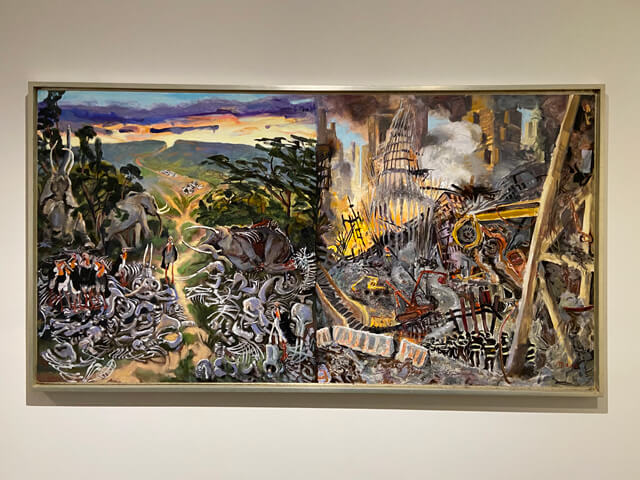
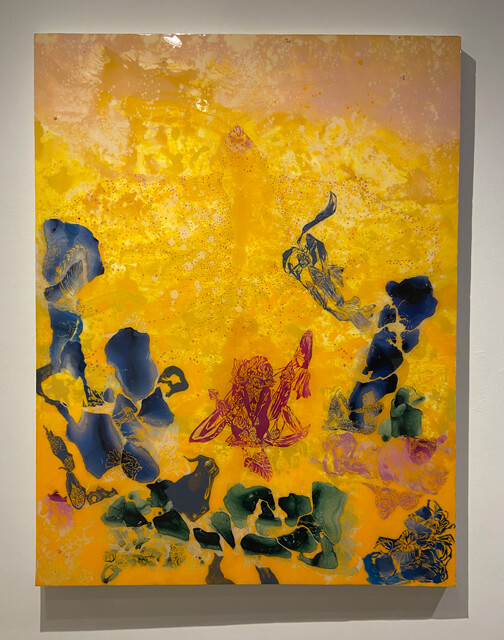
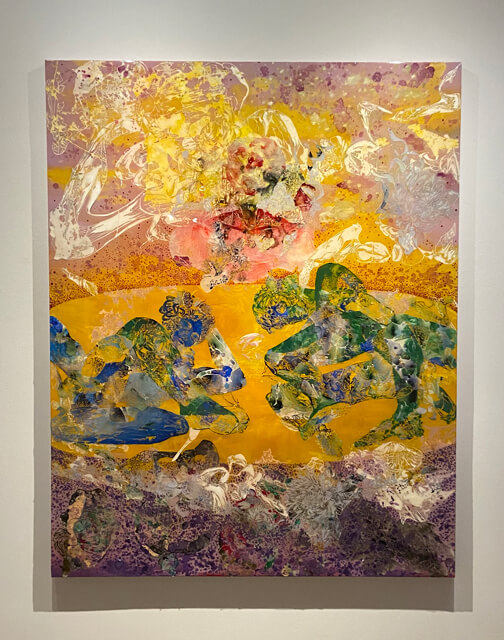

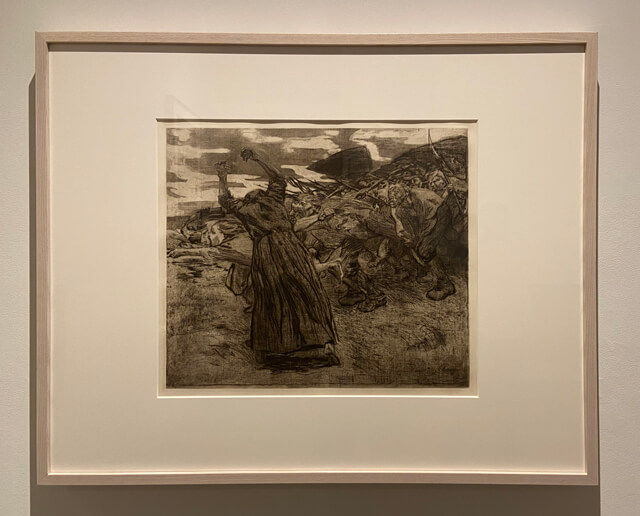
Click on Images to Enlarge
Being a portrait artist myself I was especially excited about the show, Such a Character: A Look at Faces in the Collection. Catching my eye were Portrait of Velasquez by Salvador Dali, Portrait of a Skeptic by Carlo Pittore, It’s me O Lord! by Rockwell Kent, Self-Portrait with Background House Gable by Max Beckmann and a sketchy yet intimate untitled ink drawing of an older couple by Don Lent.
Separated on their own wall next to the small gift shop were three exquisite charcoal portraits. I had never heard of this artist before but have since learned that Waldo Peirce was once referred to as the “American Renoir.” These three sublime drawings started me on a quest to learn more about him, which will hopefully lead to its own post on this blog in the future.
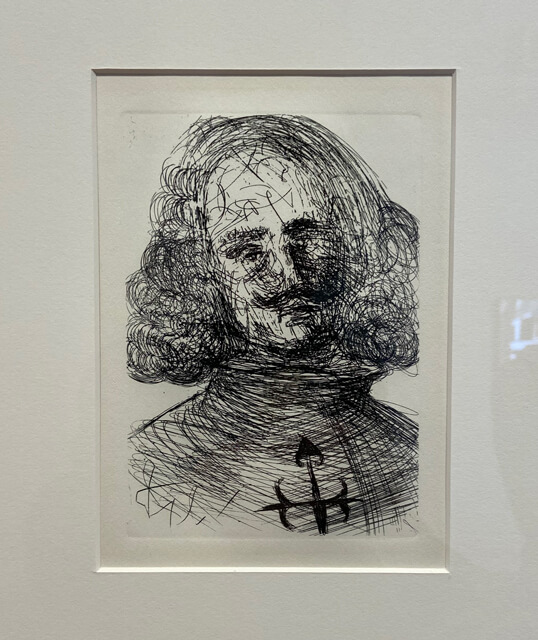
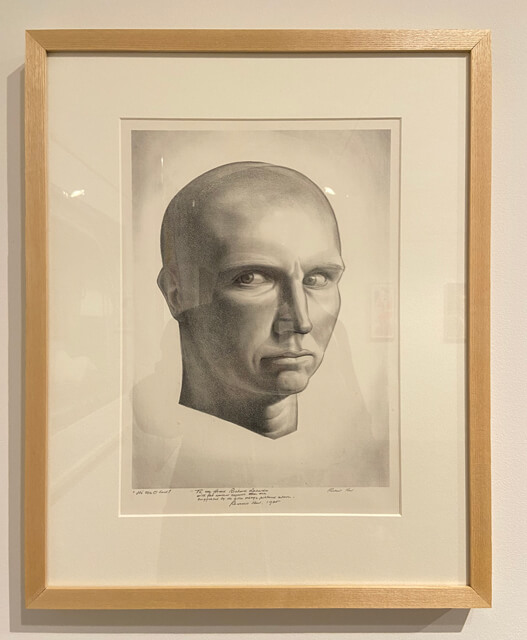
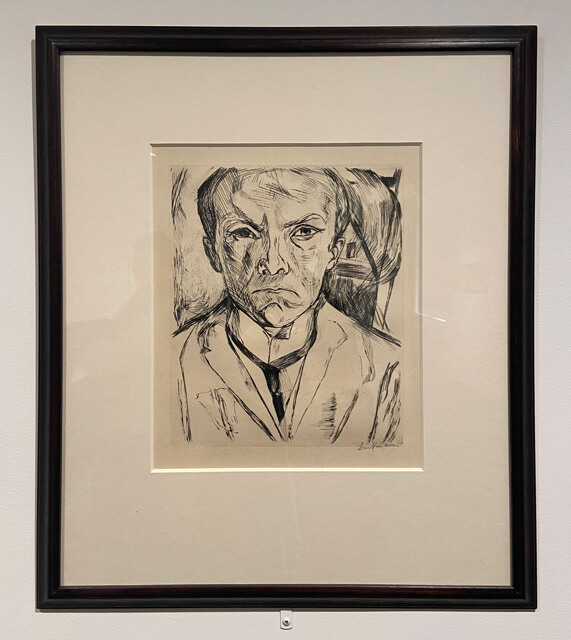

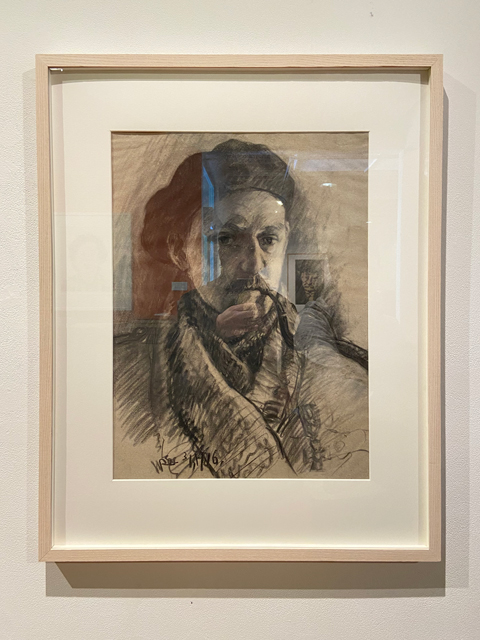

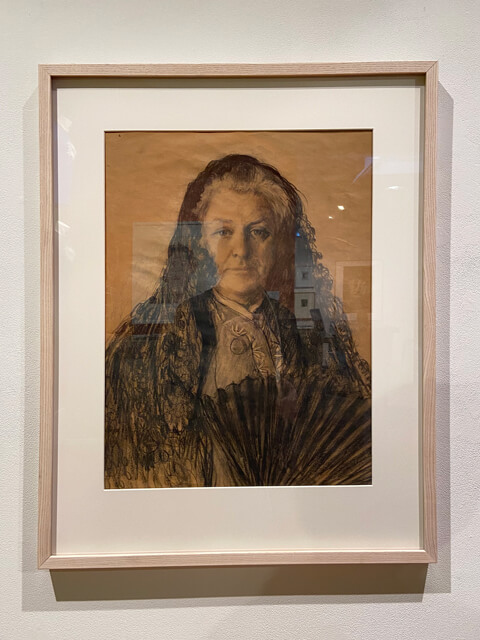
Click images to enlarge
One Year Later
I meant to visit the Zillman again in March this year but it was closed the day I happened to be in Bangor. I did get back this September and was once again impressed by the quality and variety of their exhibits, even if three of them were not my artistic cup of tea.
Those three were exhibits by experimental artist Tim McFarlane, abstract expressionist Jon Schueler, and a collection of photography from the Zillman’s permanent collection.
Tim McFarlane’s work, while being abstract, teemed with visual interest. His use of designs that looked like overlapping paper cutouts, along with his color choices created an inviting sense of depth. I felt like I could climb into his paintings and explore the patterns between each layer. It may not have moved me like figurative artwork does, but it was fun to experience.
In complete honesty Schueler’s work did nothing for me. Despite the curatorial notes saying the Scottish skies were his “grand subject”, and calling him a “master mark maker” and informing us he is represented in numerous “prestigious museum collections”, I just didn’t see the appeal.
When confronted with completely non-figurative work I fall back to formalism. This is the study of art based on its technique, materials, composition, color and form. It ignores context, messaging and meaning and looks at art as if it is nothing more than a component of its materials and execution. Even through my formalistic lens I found nothing I could relate to or admire in Schueler’s work.
I didn’t take photos of either artist’s work, but you can see samples here so you can experience their art and make up your own mind.
- https://zam.umaine.edu/another-day-another-way-tim-mcfarlane/
- https://zam.umaine.edu/paintings-and-drawings-jon-schueler/
The best thing about the Zillman is that if you’re not moved by one gallery, you can move onto the next one and still expect to be blown away by something. That’s what happened to us when we entered the space showcasing their newly acquired King Family Collection of Japanese Prints.
I know very little about Japanese art but I do know that both Monet and Van Gogh were admirers and collectors of Utagawa Hiroshige’s woodcut prints. When you see his prints in person it’s clear to see why. Despite the clean lines and smooth color transitions you can see how the two giants of impressionism were influenced by these delicate, vibrant, and atmospheric prints. They are a master class in how to evoke emotion with line and color.
The photos do not do these prints justice. If you read this before the show closes on December 29, 2026, it is worth the trip to the Zillman to see them in person.
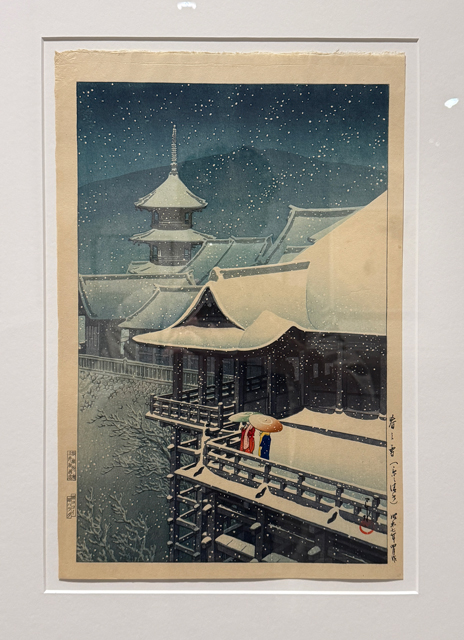
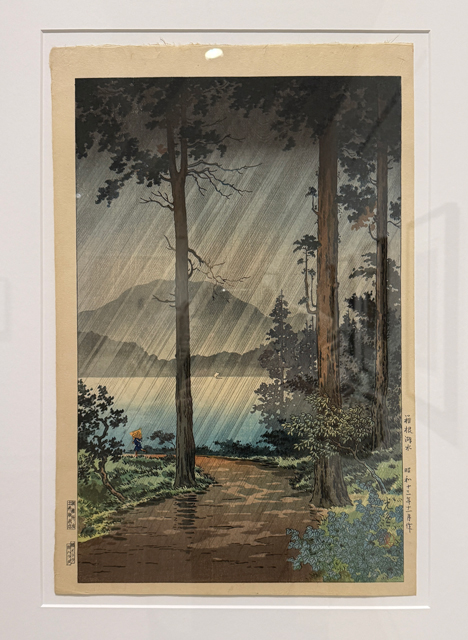
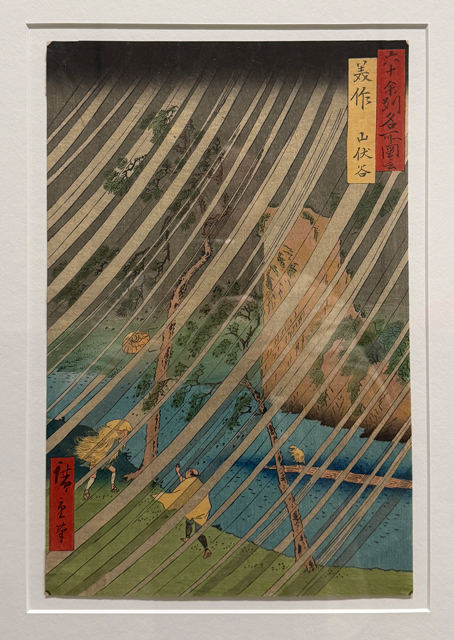
Click images to enlarge
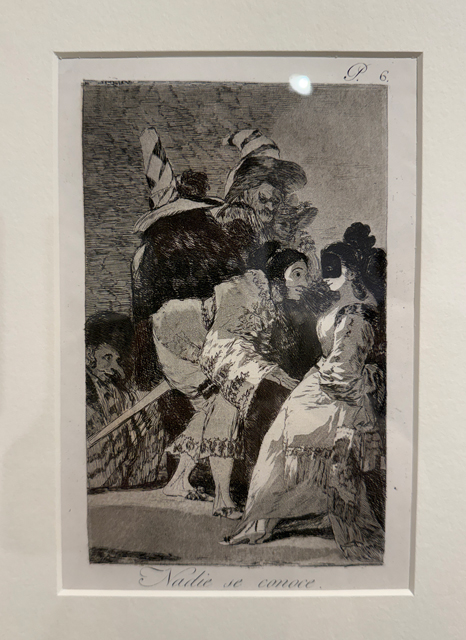
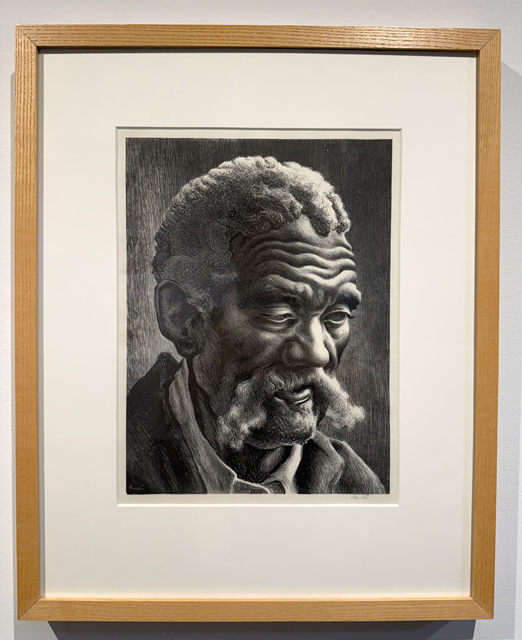
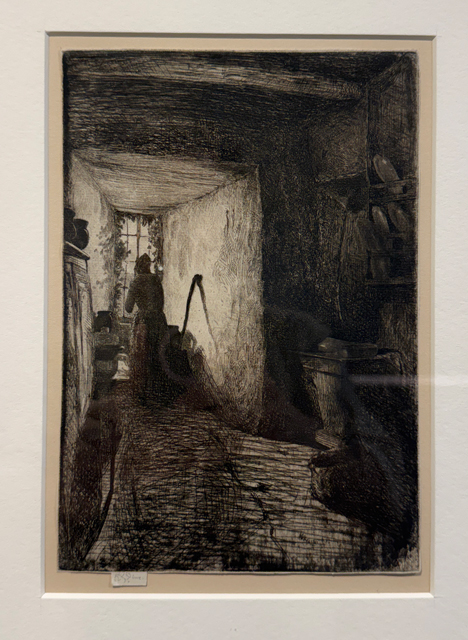
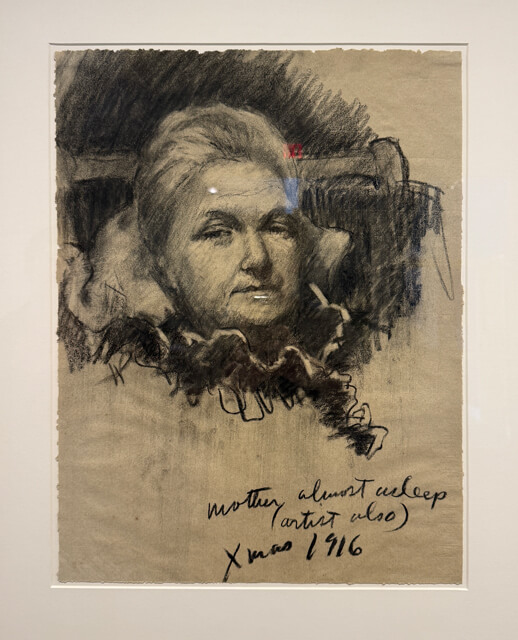
The final show we saw contained works from the permanent collection selected from each decade of acquisition since the Zillman’s founding in 1946. I was very excited to see this exhibit. Most of the contemporary art I’ve seen at the Zillman in my two visits there has been amazing. I’m looking forward to being introduced to more new artists on my next visits. But if I’m being honest, I’m visiting the Zillman for their permanent collection of figurative modern artists. I want to see more of their collection and see their heavy hitters. I’m here for the artistic name dropping.
Pieces by Thomas Hart Benton, Georges Braque, Francisco Goya, Pablo Picasso, James McNeill Whistler were all represented in this collection, as well as many more lesser-known artists who were not out of place even among the aforementioned giants. They even had another beautiful charcoal portrait by Waldo Peirce to further pique my interest in learning more about him. My only complaint about this exhibit was it wasn’t bigger. However, if they meant to tease me and entice me back to see more exhibits featuring works from their permanent collection, they succeeded.
Click images to enlarge
Things to Know When Visiting the Zillman
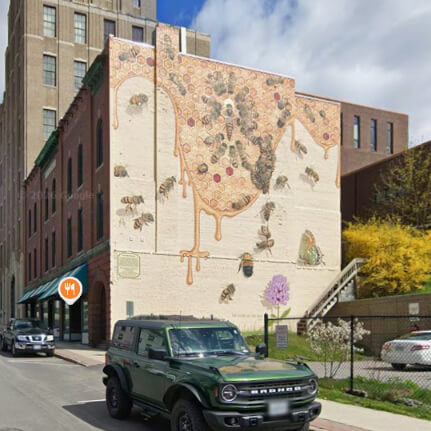
There is no dedicated parking for the Zillman, but street parking is plentiful in the area. We’ve always had good luck parking on Park Street near the “The Good of the Hive” mural.
The Zillman has two entrances. The entrance on Harlow Street goes to the downstairs floor. The other door enters the 2nd floor via a bridge that extends over the Kenduskeag Stream from the Hannibal Hamlin Parkway. The parkway is a pedestrian-only path through a narrow park behind the museum. It’s a charming little park and if you visit in deep winter like we did it’s worth it to see all the ice floes building up in the stream at the base of the building.

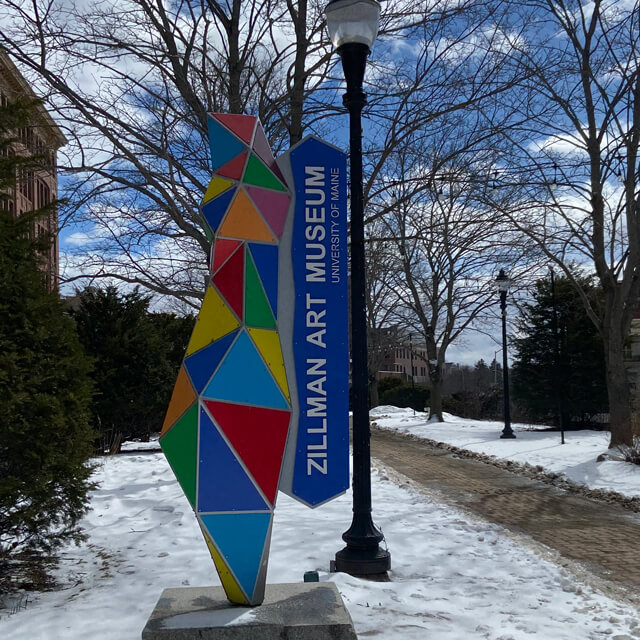
Click images to enlarge
As of this writing admission to the Zillman is free thanks to corporate sponsorship of Birchbrook, a Bangor-based investment advisors company.
The Zillman does not allow coffee (or any beverage) in the museum. I recommend sitting and enjoying a cup of coffee at the cozy Chimera Cafe around the corner before visiting.
One of my favorite things about the Zillman is their unassuming gift shop. Definitely talk to whoever is at the desk. We spoke with Mary Ellen who told us stories about some of the items they had on sale. She knew all about them because she picked them herself.
It’s a small museum so you can plan on taking about an hour to see everything. But also plan on going back frequently. No matter when you visit the Zillman will most certainly have something you’ll enjoy.